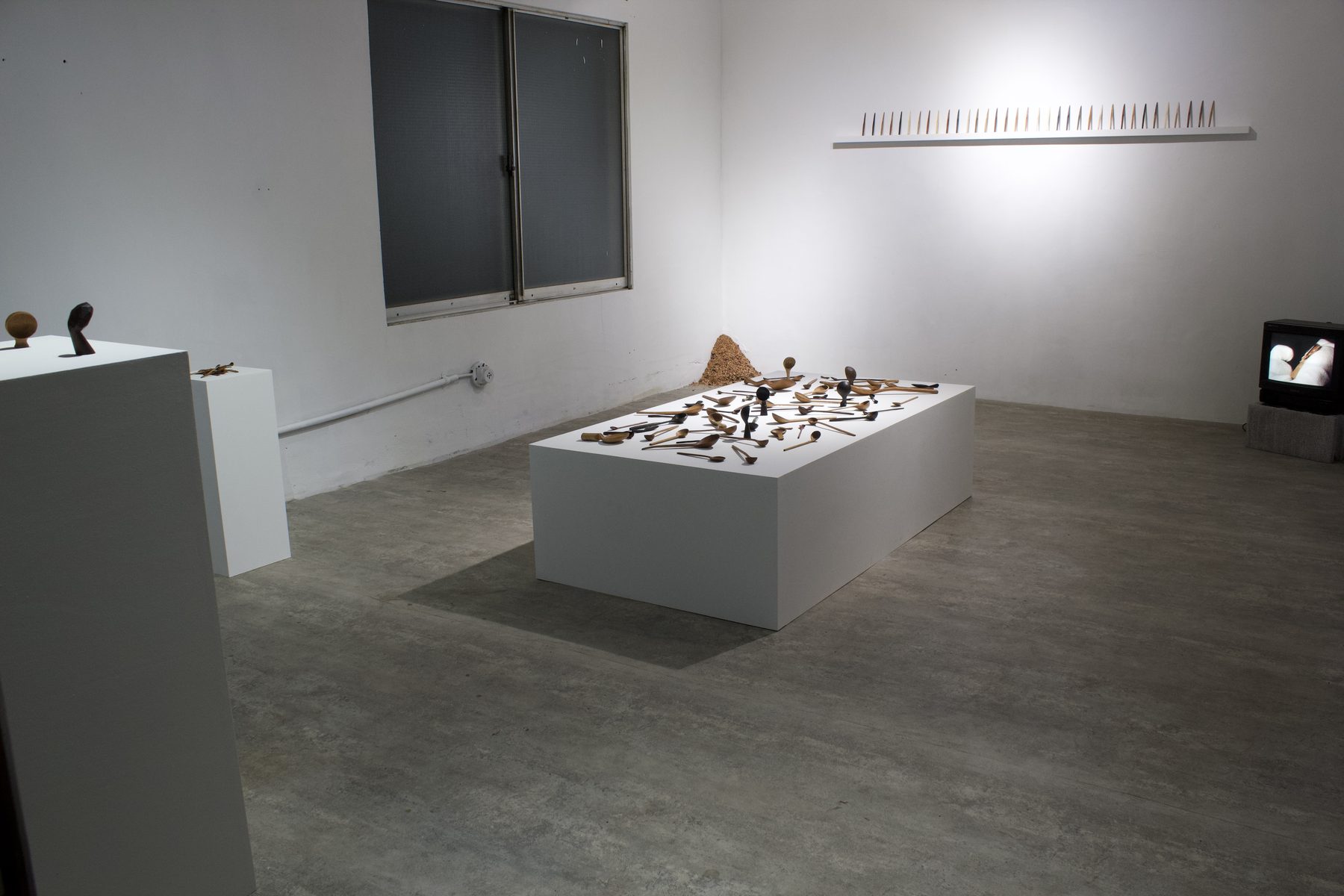
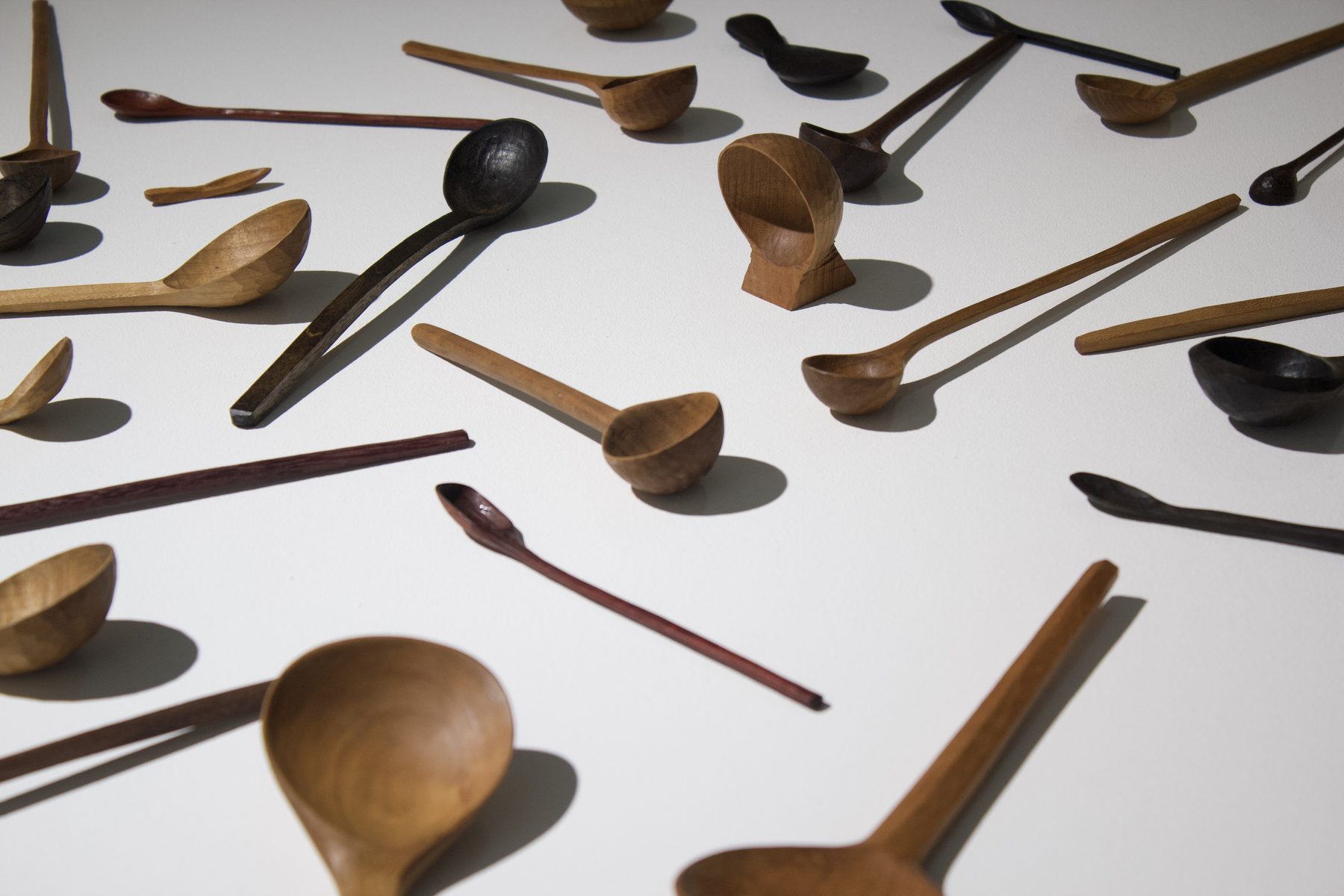
Affordance, サイズ可変Affordance, dimensions variable
端材という制約の中で制作するというルールだけが存在し、一貫性がなく即物的なものが多い。造形に合わせた製材はせずに、20種類ほどの木材の端材から選び、手に取った時のインスピレーションから制作を始める。最初に材から最大限取れる、つぼ(掬う部分)の形を作り、必然的に柄(持ち手)の長さは決定される。中には用途を度外視した造形もあり、端材という制約から生まれたかたちは、整頓されておらず曖昧な形をしているが、つぼと柄のようなものがくっ付いていれば、匙として一瞬感じてしまうのは、私たちはそういった曖昧さを記号にして輪郭を捉えていることに似ている。それは個人個人がこれまでの経験によるものではなくアフォーダンスにより直感的に知覚しているのではないかと思う。The only rule was to work within the constraint of offcuts, so the pieces are inconsistent and mostly matter-of-fact. No timber was milled to suit a form; each piece began with a choice from some twenty kinds of offcut and the impulse of holding it in the hand. First the bowl, the scooping part, was made as large as the material allowed, and the length of the handle followed inevitably from that. Some forms disregard use altogether, and the shapes born of the constraint of offcuts are untidy and ambiguous, yet if something like a bowl and a handle are joined, we sense a spoon for an instant. That resembles the way we grasp outlines by turning such ambiguity into signs, and I suspect it is perceived intuitively through affordance rather than through each person’s past experience.
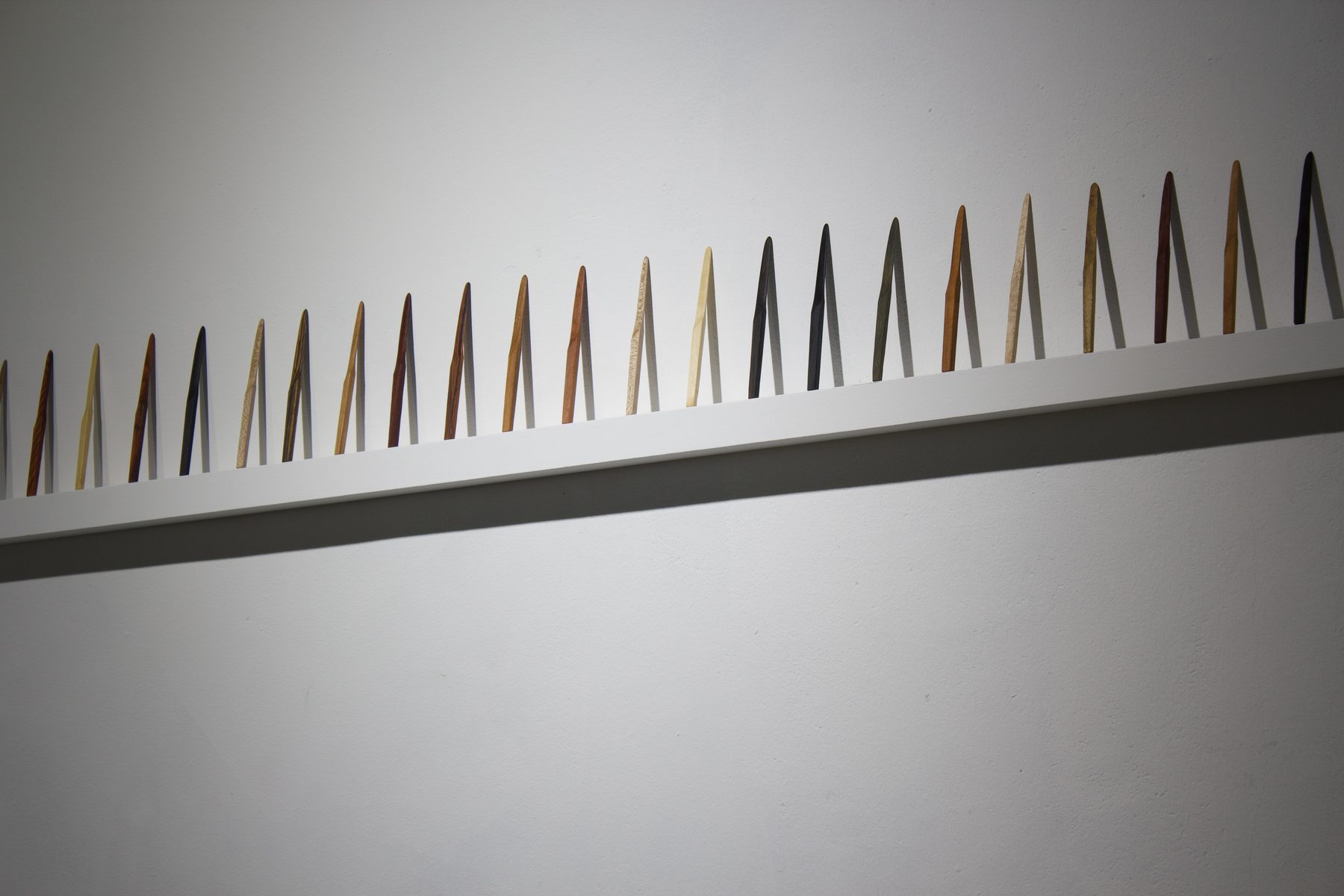
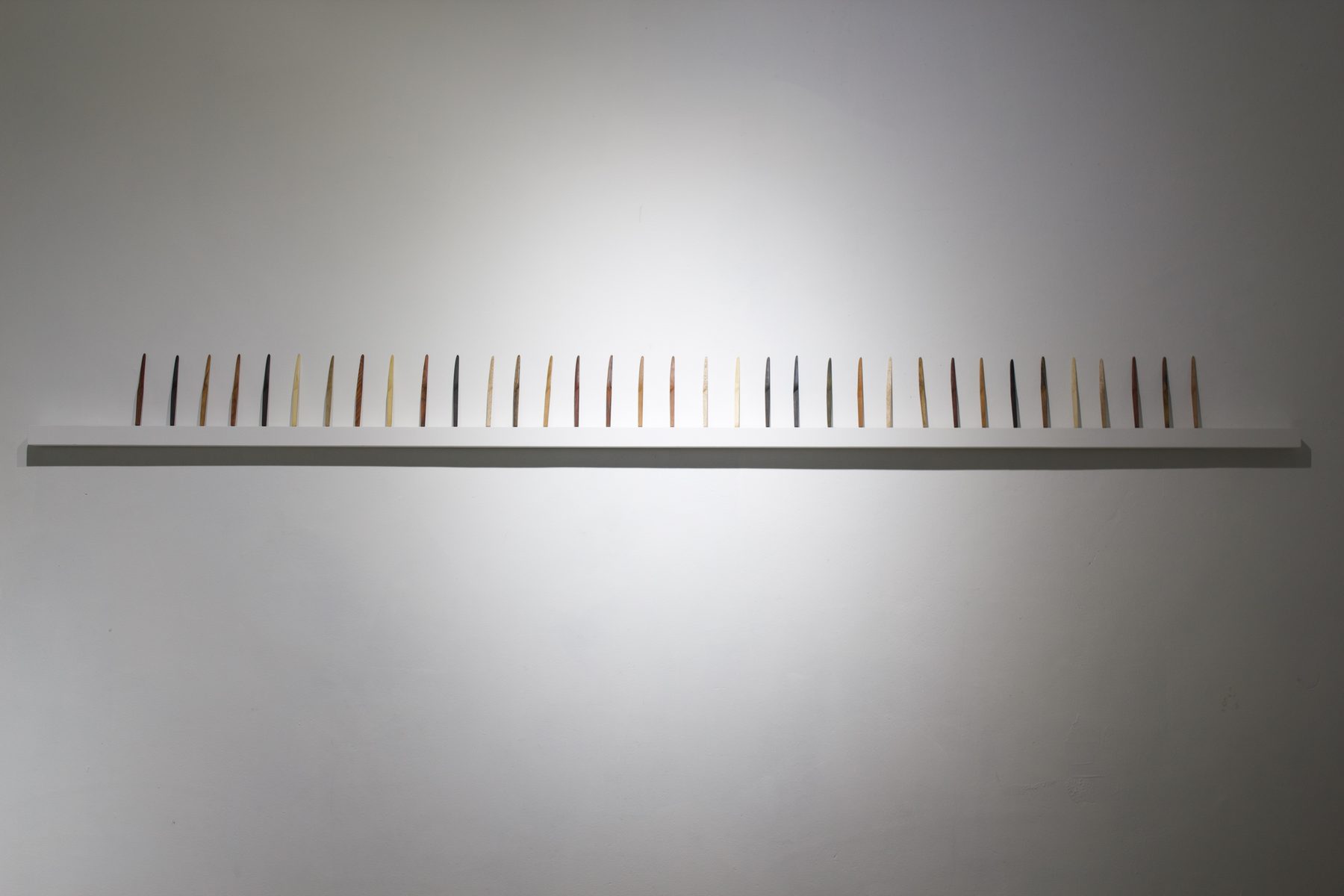
distance, サイズ可変distance, dimensions variable
他者と自分の関係性をはかるパーソナルスペースの4区分の1つのソーシャルディスタンスに準え、それぞれの距離を1/10 (4.5cm)間隔で離している。樹種と木目の個性を個体として捉え、多様な個性があると同時に同じ種であることとを可視化した。 ※山桜, 楓, 欅, 神代ニレ, ピンクアイボリー, ツリバナマユミ, パドック, サティーネ, フェルナンブーコ, ツゲ, パロサント, ムラサキタガヤ, スネークウッド, ポポコロ, ポコテ, パープルハート, バーズアイメープル, 黒柿, 紫檀, 黒檀Modelled on social distance, one of the four zones of personal space by which we gauge our relation to others, each piece is set apart at one tenth of that distance (4.5 cm). Treating species and grain as individuals, the work makes visible that there is great diversity of character and, at the same time, a single kind. * Mountain cherry, maple, zelkova, jindai elm, pink ivory, Euonymus oxyphyllus, padauk, satiné, pernambuco, boxwood, palo santo, purple tagayasan, snakewood, popocoro, bocote, purpleheart, bird’s-eye maple, black persimmon, rosewood, ebony
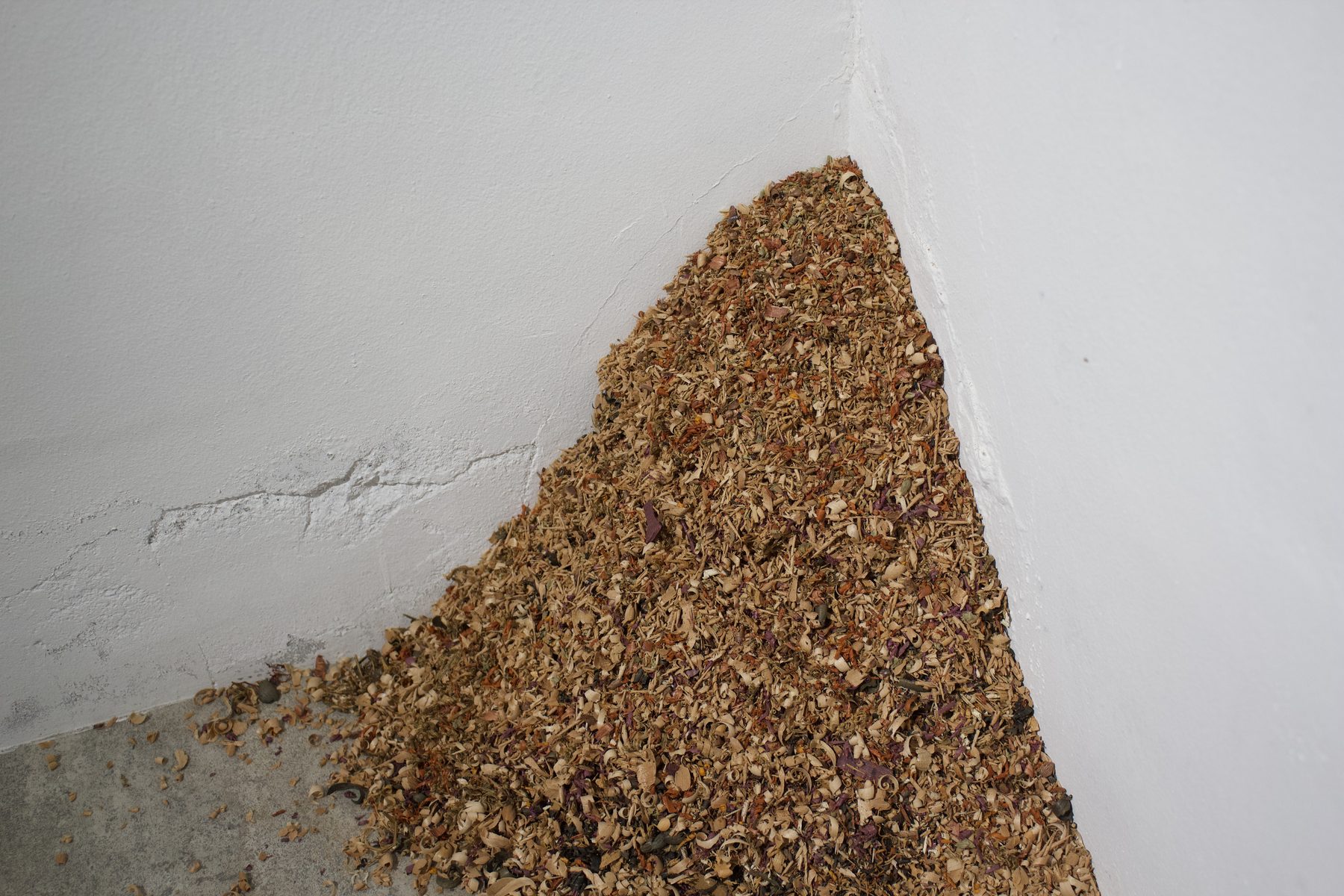
Chip Mountain, サイズ可変Chip Mountain, dimensions variable
炭鉱から石炭を採掘する際に出てくる捨石や不要な土を半世紀以上積み上げた結果、山のような大きさになったものをボタ山というものがあります。言わば人工的に作られた山である。ただ積み上げられたため当然地盤は緩く土砂崩れや、入り混じった石炭が自然発火したり、消えない火災として現在でも問題になっているが、産業の遺産としても残されている。しかし、そういった人にとっては無価値なものでも植物が自生し環境サイクルを作っていて、動植物にとっては必要な存在なのも事実。一方向から見れば無価値なものも、ある側面では表裏一体な価値が存在する。そこには差異があり無価値と捉えてしまいがちである。この作品では制作過程で出る木屑を集積し作品化することで価値を見出そうとする試みです。When coal is mined, the waste rock and unwanted earth that come out with it are piled up; after more than half a century the piles grow to the size of mountains, known in Japan as bota-yama, or slag heaps. They are, in effect, artificial mountains. Because they were simply heaped up, the ground is loose, and landslides and the spontaneous combustion of the coal mixed in remain problems to this day, as fires that will not go out; yet they are also preserved as industrial heritage. And though worthless to people, plants take root on them and form an environmental cycle, so that for animals and plants they are a necessary presence. What is worthless from one direction holds, from another side, a value that is its inseparable twin. There is a difference there, and we tend to see only the worthlessness. This work is an attempt to find value by gathering the wood chips produced in the process of making and turning them into a work.
(無題) Affordance, 映像作品, 7:11(Untitled) Affordance, video, 7:11